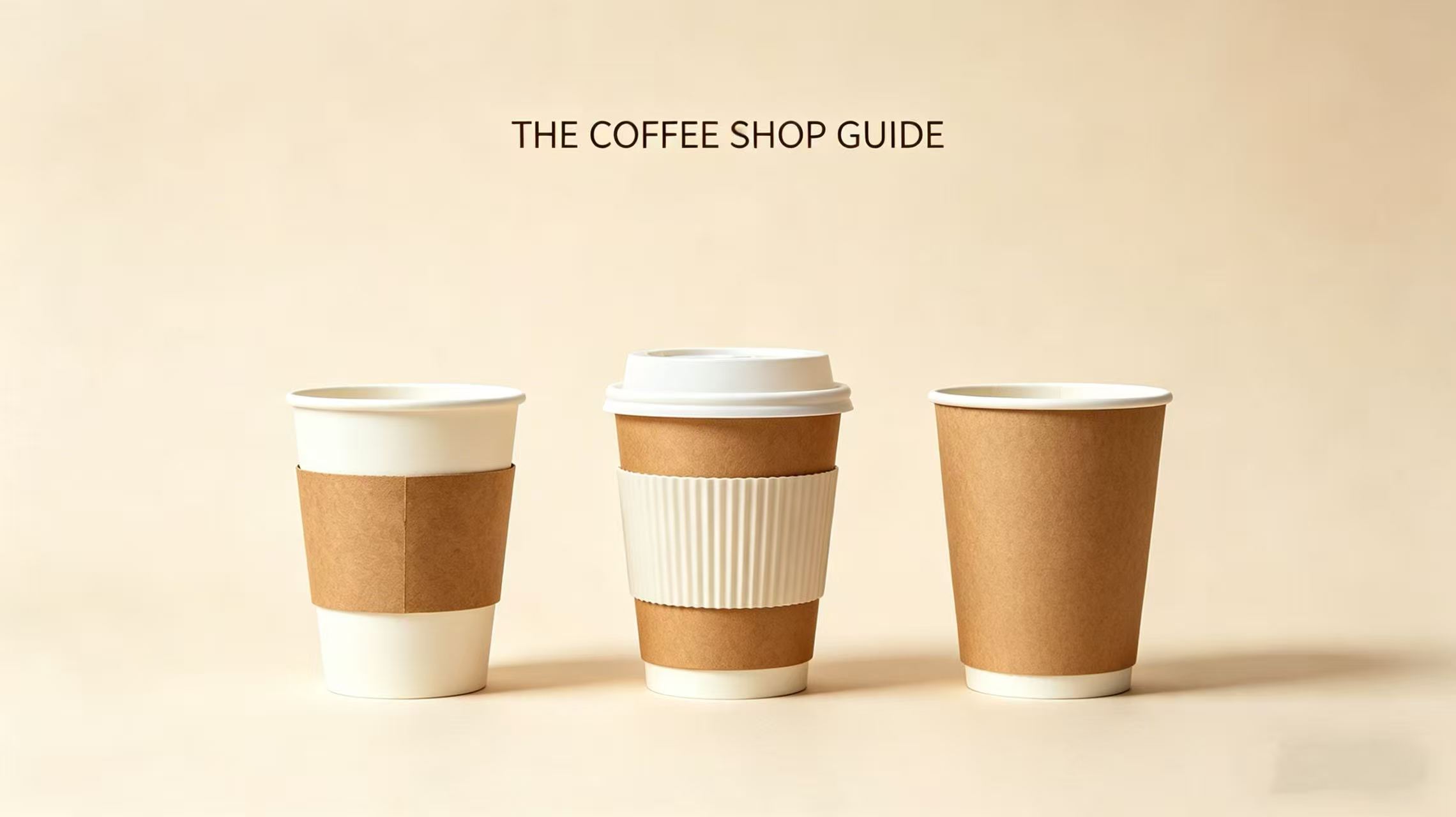
The Coffee Shop Guide: Choosing High-Quality, Heat-Insulated Paper Cups
Global coffee consumption continues to rise, and the popularization of takeaway and on-the-go scenarios has driven a surge in demand for hot drink Packaging. As a core supporting product for coffee shops, high-quality heat-insulatedpaper cups directly affect brand reputation and market competitiveness. Recently, combined with the current development trends of the global paper cup industry and the core needs of foreign trade exports, we have compiled and released "The Coffee Shop Guide: Choosing High-Quality, Heat-Insulated Paper Cups" to provide professional reference for global coffee practitioners and foreign trade purchasers, help the industry carry out standardized procurement, and promote the high-quality development of the heat-insulated paper cup foreign trade market.
The Guide clarifies that selecting high-quality heat-insulated paper cups needs to focus on four core dimensions. First, the insulation structure, which is mainly divided into three types: single-wall, double-wall and ripple-wall. Single-wall cups have low cost and need to be used with sleeves, suitable for small coffee shops with limited budgets; double-wall cups, with double paper layers and an air insulation gap, have excellent heat insulation effect and do not need sleeves, suitable for high-end chain coffee shops and long-term holding scenarios; ripple-wall cups balance cost and heat insulation performance, making them a cost-effective choice for mid-range stores. Their corrugated structure blocks heat conduction through the air layer, which can reduce the surface temperature of the cup by 10-15℃ and improve use safety.
Second, raw materials and safety standards are the core thresholds for foreign trade procurement. The Guide emphasizes that the raw materials of paper cups should be food-grade virgin wood pulp, avoiding recycled paper containing impurities. The coating should preferably be PE coating (high temperature resistance and strong water resistance) or PLA degradable coating (plant-based material, in line with environmental trends), and chemical leakage risks caused by non-food-grade coatings should be firmly eliminated. At the same time, products must comply with the safety standards of the corresponding regions, such as EU 1935/2004, US FDA, China GB 4806.7-2016, etc. Printing should use water-based inks, and printing is prohibited within 15mm of the cup rim and 10mm of the cup base to ensure drink safety.
Third, performance testing is the key to ensuring quality. Qualified heat-insulated paper cups need to pass four core tests: no leakage or deformation within 30 minutes after being filled with 85-95℃ hot drinks; the surface temperature of the cup body is lower than 46℃, which can be held safely with bare hands; the cup body is stiff, not easy to squeeze and deform, and has good stacking stability; the cup bottom and rim are well sealed, with no leakage when tilted. For foreign trade orders, these performance indicators directly determine whether the product can pass the inspection of the importing country and avoid trade risks.
Fourth, the balance between cost and value. Combined with foreign trade procurement scenarios, the Guide gives suggestions: small foreign trade orders can prioritize single-wall cups with sleeves to control procurement costs; mid-to-high-end orders can choose ripple-wall cups to balance cost performance and user experience; high-end customized orders recommend double-wall PLA-coated cups, which meet the environmental needs of the European and American markets. At the same time, brand identity can be strengthened through customized printing to enhance product added value. It is worth noting that international chain brands such as Starbucks have launched mineral-based coated paper cups, using silicon dioxide material, which has both compostability and heat insulation, becoming a benchmark for industry innovation.
The release of the Guide not only provides a scientific basis for coffee shops to purchase, but also offers professional reference for foreign trade purchasers to select high-quality suppliers and avoid procurement risks, helping China's heat-insulated paper cup foreign trade products enhance international competitiveness and promoting the global coffee packaging industry to develop in a safer, more environmentally friendly and higher-quality direction.

Bamboo vs. Wood Pulp: Which Eco-Friendly Material is Right for Your Brand?
The Carbon Footprint of Paper vs. Plastic: A Data-Driven Comparison
Related Article