Kraft vs White Food-Grade Paper Packaging: Differences & Best Use Cases


With global plastic bans and sustainable consumption trends accelerating, disposable paper packaging has become the mainstream choice for catering chains, food retailers, and wholesale distributors across North America, Europe, and other international markets. When purchasing custom disposable food packaging, most brand operators and procurement teams face a key decision: selecting natural brown kraft paper packaging or bright white paper packaging for their product lines.
As a professional food packaging manufacturer serving global clients, Judin Pack specializes in customized PE and PLA coated paper packaging solutions. To help businesses make data-driven procurement decisions, we comprehensively compare kraft paper and white paper food packaging in terms of material characteristics, brand presentation, sustainable attributes, cost performance, and applicable scenarios.
Core Material Differences Between Kraft and White Paper
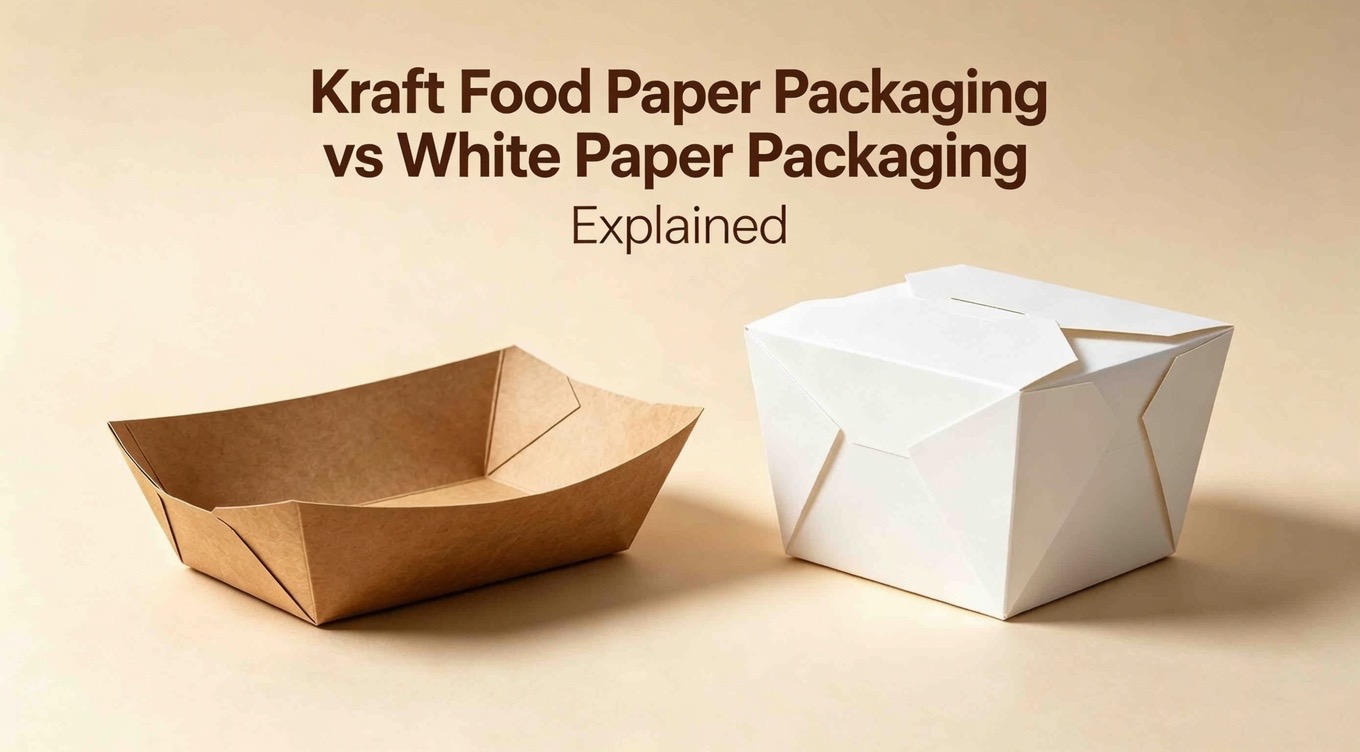
Natural brown kraft paper is manufactured with unbleached long-fiber wood pulp. It omits heavy chemical bleaching processes, retaining the original natural brown texture and intact wood fiber structure. In contrast, food-grade white paper adopts fully bleached wood pulp, delivering a uniform, flawless bright white surface for high-standard packaging needs.
Both paper types support custom food-safe PE waterproof coating and PLA compostable coating, providing excellent waterproof and grease-resistant performance for hot meals, fried snacks, fresh salads, and deli foods. All packaging products from Judin Pack comply with FDA food contact standards, ensuring complete safety for direct food contact.
A common industry misunderstanding is that white paper is less durable than kraft paper. In fact, when matched in the same gram weight (gsm), both materials feature equivalent tensile strength, tear resistance, and stacking stability. The color difference only stems from different production processes, not variations in structural durability.
Aesthetic Performance & Brand Value
Packaging appearance directly influences consumer brand cognition and product competitiveness on retail shelves. The two paper types present completely different brand styles.
Kraft paper’s original rustic fiber texture conveys strong natural, eco-friendly, and low-carbon brand attributes. It works perfectly with minimalist dark or monochrome printing, making it a top choice for casual fast-food restaurants, barbecue stores, organic food brands, and farm market products. Its understated natural style helps brands highlight green and healthy positioning. The only limitation is that bright, light color gradients may appear dim and impure on kraft surfaces, making it unsuitable for complex full-color artwork design.
The pure white background boasts ultra-high color reduction and saturation, accurately restoring the details of color logos, product pictures, and gradient designs. It creates a clean, modern, and premium brand image, which is widely favored by bakeries, dessert shops, high-end restaurants, and premium ready-to-eat food lines. Exquisite white packaging significantly enhances product grade and shelf attractiveness.
Sustainability & Environmental Compliance
Environmental compliance has become a core assessment standard for international food brand procurement. Unbleached kraft paper consumes fewer chemical reagents and water resources during production, with a lower carbon footprint, making it a more prominent selling point for brands focusing on green marketing.
White paper is also 100% recyclable and environmentally friendly, though the bleaching process brings slight additional resource consumption. To meet global circular economy and composting requirements, Judin Pack can equip both kraft and white paper packaging with biodegradable PLA coating, fully adapting to EU and North American environmental regulations.
Cost Performance for Bulk Procurement
For large-volume wholesale orders, kraft paper packaging has obvious cost advantages thanks to its simplified production workflow. It is the most cost-effective solution for daily mass packaging such as food boats, disposable paper trays, and conventional takeout boxes.
White paper packaging has a slight price premium due to its complex bleaching and finishing processes. Nevertheless, it is still the preferred option for high-end product lines, as its premium visual effect supports higher retail pricing and brings greater commercial value to brands.
Applicable Scenarios for Each Packaging Type
- Packaging for fast food, BBQ, deli, and daily takeaway scenarios
- Eco-oriented organic food and agricultural product packaging
- High-volume bulk orders with strict cost control requirements
- Products with simple monochrome logo printing design
- High-end packaging for cakes, pastries, desserts, and gourmet ready meals
- Custom full-color printed packaging with delicate design details
- Shelf-display products that require strong visual competitiveness
- Packaging for premium catering and high-end consumer groups
Final Packaging Selection Advice
There is no absolute superior option between kraft and white food-grade paper packaging. The optimal choice depends on your brand positioning, printing design requirements, target consumer groups, and procurement budget. Many long-term cooperative clients of Judin Pack adopt a collocation strategy: using cost-effective kraft packaging for daily mainstream products and high-grade white packaging for premium product lines.
As a reliable custom paper packaging manufacturer, Judin Pack provides one-stop customized solutions including food trays, takeout boxes, paper cups, cup holders, and customized outer cartons. We support food-grade PE/PLA coating, flexible flexo printing, and personalized size customization. All products pass FDA food-grade testing and serve food distributors and catering brands in the US, Europe, and global markets.
Feel free to contact our professional team for material selection guidance, printing scheme confirmation, and customized wholesale quotations!
How to Choose Proper Food Packaging: Introduction to Common Packaging Materials
Food Paper Packaging vs Plastic Packaging Which Is Better Today
Related Article