A Complete Guide to Sourcing Wholesale Paper Cups for Coffee Shop Chains

For coffee shop chains, disposable paper cups are far more than simple packaging. They are a core part of customer experience, a moving brand billboard, and a critical supply chain item that impacts operational costs, regulatory compliance, and sustainability commitments. Many multi-location café operators struggle with inconsistent cup quality, unreliable lead times, mismatched lid fit, confusing certification requirements, and hidden logistics costs when sourcing wholesale paper cups. A poor cup choice can lead to leaking hot drinks, faded branding, unexpected waste, or even non-compliance fines in target markets.
This guide breaks down every key step for coffee chains looking to source wholesale paper cups, from defining product specifications and selecting materials, to supplier vetting, quality control, MOQ negotiation and logistics planning. As a professional paper packaging manufacturer, we help regional and global coffee brands build stable, cost-effective paper cup supply chains tailored to in-store and takeaway operations.

Before contacting any paper cup manufacturer, clarify your real operational needs across all store locations. Start with standard sizes that fit your menu. The most common sizes for coffee chains are 8oz, 12oz, 16oz and 20oz, covering espresso, lattes, flat whites and large takeaway drinks.
Next, select the cup wall structure. Single-wall paper cups work well for cold beverages and short-sip hot drinks and carry a lower unit cost. Double-wall or ripple-wall cups add thermal insulation, eliminate the need for paper sleeves and reduce the risk of burns for customers holding hot coffee. For busy drive-thru and takeaway-heavy locations, double-wall cups are often worth the extra investment.
Paper grammage (GSM) directly determines cup rigidity and leak resistance. For hot coffee, 280–320 GSM food-grade virgin paperboard is recommended. Thin, low-GSM paper may look similar at first glance but softens quickly when exposed to hot liquids, leading to cup deformation and leakage. Never overlook rim diameter and lid compatibility. Even perfectly printed cups will create complaints if lids pop off or leak during handover. Always test your selected cup and lid together with your actual hot beverage temperature.
The inner lining is one of the most important decisions in paper cup sourcing. Two mainstream options dominate the market: PE coating and PLA coating.
PE-lined paper cups are the traditional, cost-effective solution. They deliver reliable waterproof performance for hot drinks and are widely accepted across most markets. For brands with tight budgets and no mandatory composting rules, PE remains a solid baseline choice.
PLA coating is plant-based, made from renewable corn starch, and certified industrially compostable under standards such as EN13432 and ASTM D6400. It suits coffee chains building eco-friendly branding or operating in regions with plastic restriction policies. Keep in mind PLA cups usually come with a higher unit price and stricter composting conditions; they do not break down quickly in regular landfill environments.
For all food-contact paper cups, insist on virgin food-grade pulp and non-toxic water-based printing inks. Avoid suppliers using recycled paper for the food contact layer, as it carries higher contamination risks. FSC certification is also valuable for brands marketing responsible forest sourcing.
Regulatory requirements vary widely by country, and missing documentation can stop your shipment at customs.
- USA: FDA food contact compliance is mandatory.
- European Union: EU 1935/2004 for food contact materials; EN13432 if claiming compostability.
- Global sustainable credentials: FSC, ISO9001, BRCGS and SGS test reports are widely recognized by chain buyers and auditors.
Request full test reports and certificates for your exact cup SKU, not generic factory certificates. Many buyers make the mistake of accepting broad certification documents that do not apply to the specific coating or paper grade on their order.
For multi-store coffee chains, factory capacity and consistent batch quality matter more than the lowest unit price. When vetting a wholesale paper cup supplier, confirm their production capacity, in-house printing workshop, lab testing capability and pre-shipment inspection process.
Always order physical samples before committing to mass production. Sample testing should include hot liquid leak testing, lid fitting, print colour matching, heat resistance and storage stability. For custom branded cups, approve a pre-production sample to lock in artwork, colour, dimensions and print position.
Build multi-stage quality checks into your order terms: pre-production inspection, inline production checks, and final pre-shipment inspection. This reduces defective rates and avoids costly delays when you are restocking dozens of café locations.

Minimum order quantities differ greatly between plain stock cups and fully custom printed cups. Plain white stock cups often have lower MOQ, suitable for new café pilots or urgent backup stock. Custom printed cups with your logo require plate setup, and MOQ typically starts from 30,000–50,000 pieces per design. Larger volume contracts unlock better unit pricing for chain rollouts.
Standard lead time is 15–30 days after artwork confirmation. Peak seasons, custom colours and PLA materials can extend lead times, so coffee chains should schedule orders ahead of holiday rushes to avoid out-of-stock issues.
When calculating total landed cost, do not only compare unit cup prices. Factor in carton packing, palletisation, shipping, import duties and waste rates. A slightly cheaper cup with high leakage rates can raise your overall operational cost significantly.
Coffee chains need predictable replenishment cycles. Work with your supplier to arrange container loading, pallet packaging and stable delivery schedules. If you operate across multiple countries or regions, discuss DDP, FOB or CIF terms to calculate accurate shipping costs before finalising orders.
Long-term partnerships bring extra benefits. Reliable packaging manufacturers can support seasonal artwork updates, new product launches, and flexible order adjustments as your café network expands. Stable supply reduces stock-out risks across hundreds of store locations.
Sourcing wholesale paper cups for coffee shop chains is not just about finding cheap printed cups. Successful sourcing balances material performance, food safety certification, brand presentation, stable lead times and total landed cost. Whether you need standard PE cups for daily takeaway or certified PLA compostable cups to support your sustainability strategy, the right packaging partner can align your paper cup solution with your brand promise.
Our team specialises in OEM & ODM paper cup production for global coffee chains, offering custom sizes, full-colour printing, certified eco-friendly materials and dedicated quality control. Contact us today to request samples and get a precise shipping quotation for your next order.
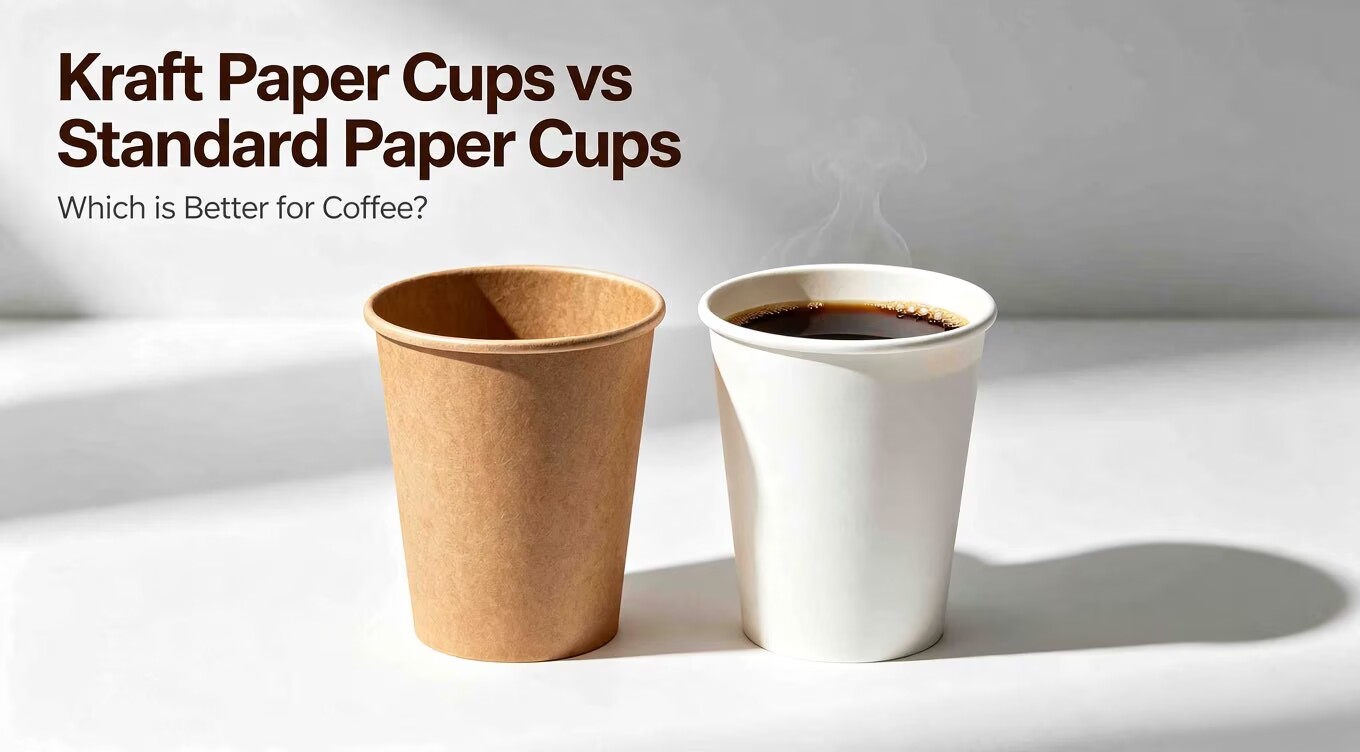
Kraft Paper Cups vs Standard Paper Cups: Which is Better for Coffee